Birdfy: a bird feeder that recognizes its visitors
- #product
- #hardware
- #AI
- #business
Bird feeding is an old hobby. Birdfy added a camera, a species classifier and a push notification — and turned a $15 feeder into a $300 product, selling a million units in about five years.
The idea in one line
Put a camera and an AI model inside an ordinary bird feeder: when a bird lands, your phone buzzes and tells you what species it is.
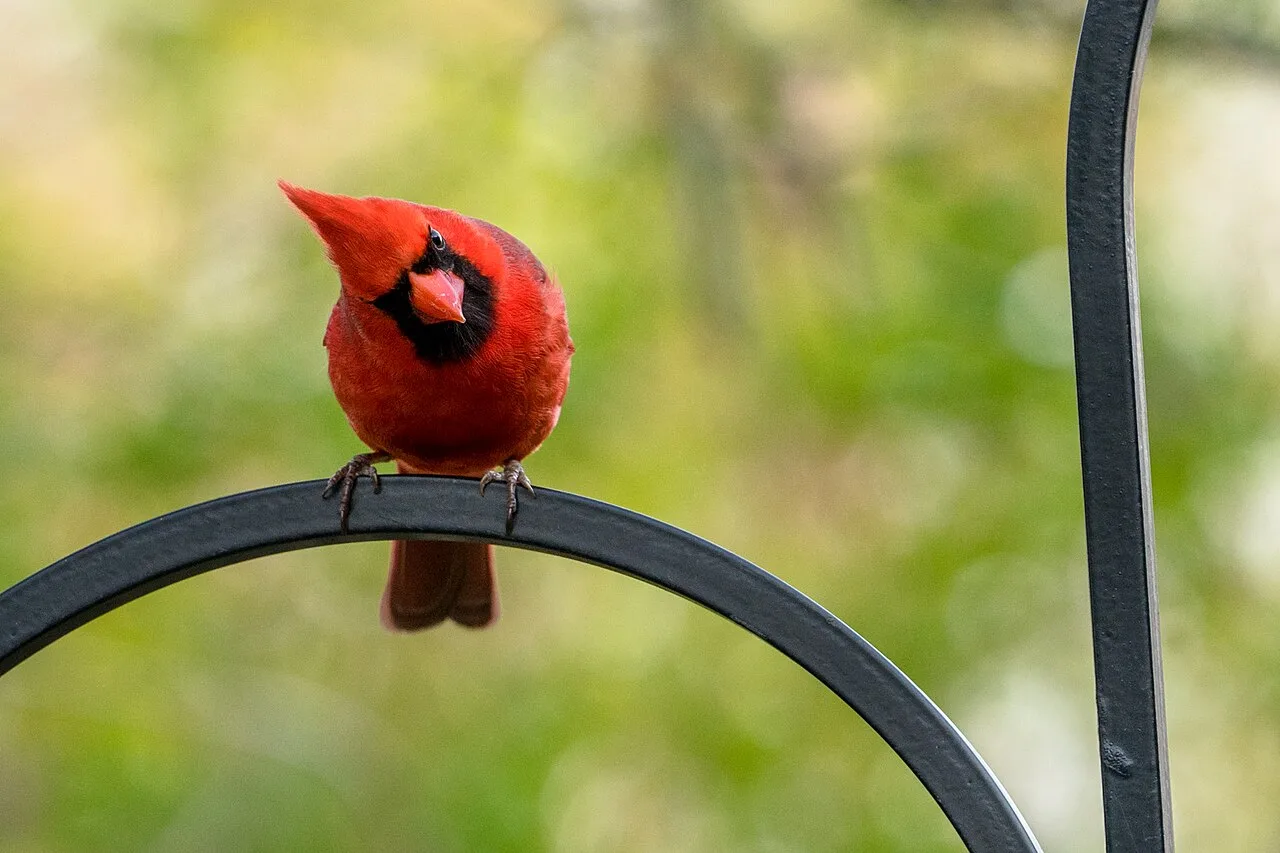
Photo: John Brighenti · CC BY 2.0, resized, via Wikimedia Commons

The marketing claim is automatic identification of 6,000+ species with instant alerts. The lineup has grown from one feeder to a birdhouse, a bird bath, a hummingbird feeder and a standalone camera, plus solar panels and poles. Main products run from $119.99 to $279.99, with the flagship at $259.99. An ordinary bird feeder on Amazon costs $15–20.
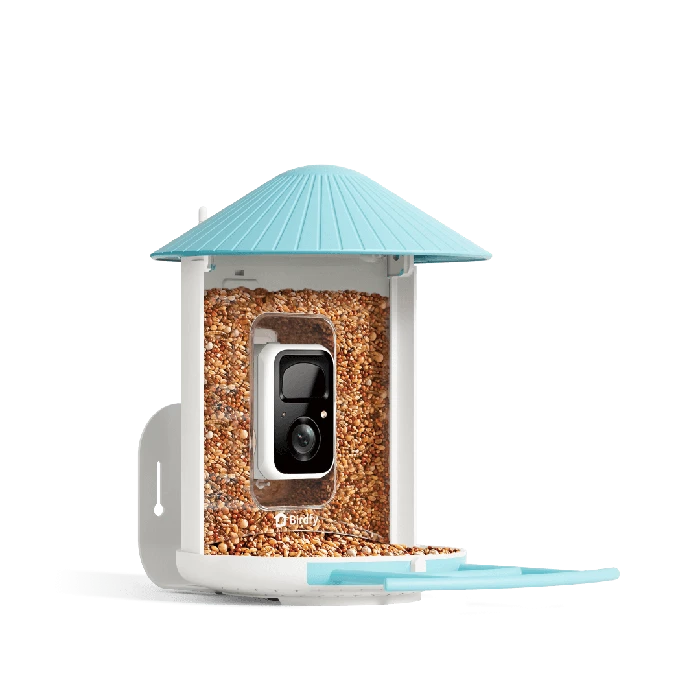
Image: official product photo from Birdfy, resized (see their press page for brand asset usage guidelines).
Why it works
It does not create a new habit; it adds a feedback loop to an old one. Bird feeding is an established hobby in Europe and North America. People already sit by the window waiting. Birdfy turns waiting into "the bird will tell you when it arrives."
It turns a chance event into collectible data. Every visit becomes a record with a timestamp, a species and a photo — something that accumulates, gets reviewed and gets shared. Users are no longer collecting birds; they are collecting a visitor log.
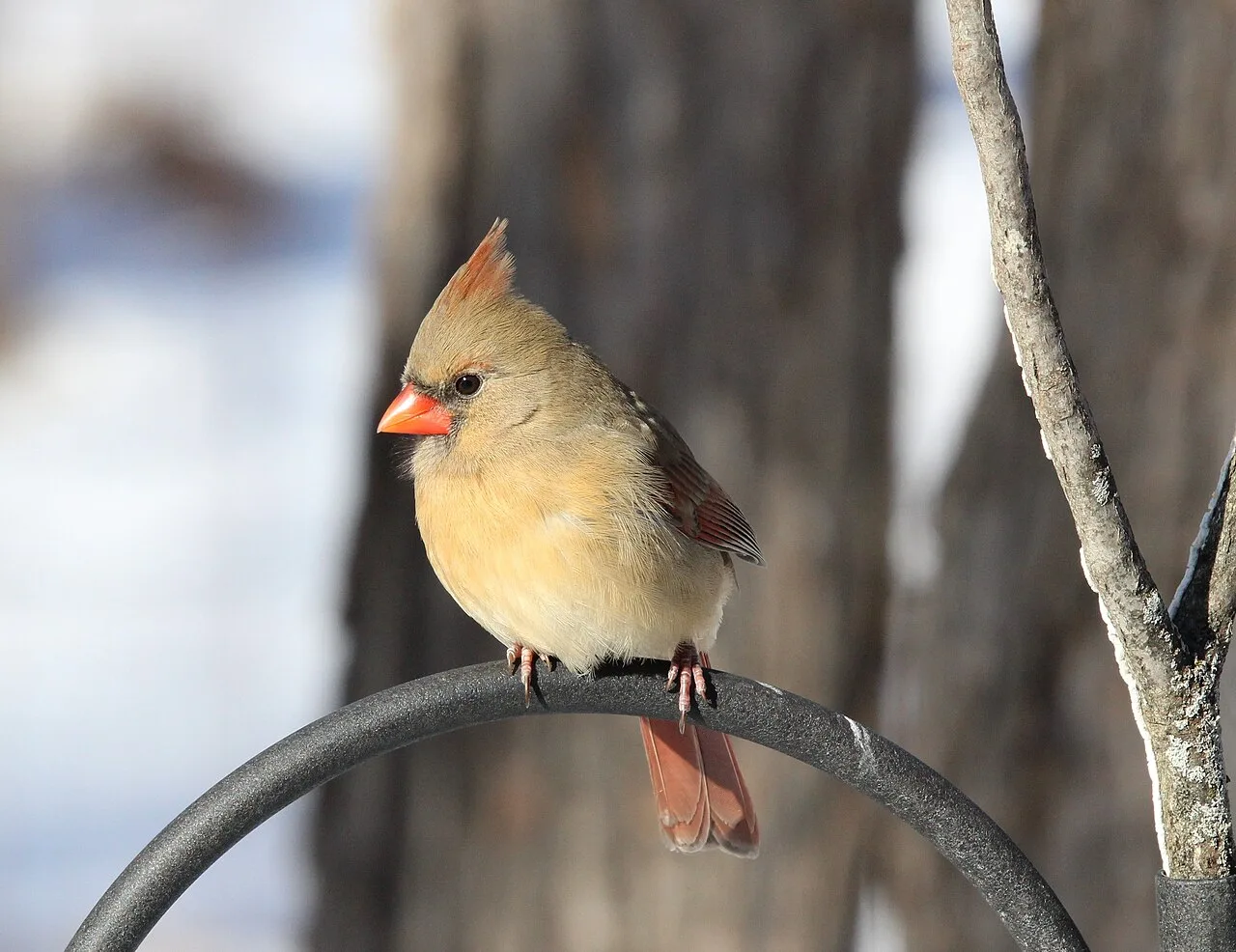
Photo: PookieFugglestein · CC0, resized, via Wikimedia Commons

The device produces its own content. According to press reports, Birdfy devices record over 8 million clips a day, more than 6.6 million of them with a bird in frame. Users end up with a ready-made library of things to share, at almost zero distribution cost.
It has a natural expansion path. Buy the feeder, then the solar panel, the pole, a second feeder, the hummingbird version, the birdhouse. The same hobby can be sold several times.
How the money is made
A note on the numbers: Netvue is private and does not publish audited financials. Below, company/press disclosures, an industry source's claim, and my own arithmetic are kept separate so you can weigh them yourself.
How big the pond is. About 96 million Americans aged 16+ watch birds, 91 million of them in their own gardens; in 2022 they spent $107.6 billion on birding trips and gear. Birdfy is fishing in the "backyard birding" corner of that pond, but the base is enormous.
Scale and funding. In September 2026 Netvue closed a Series A from WestSummit Capital, CCV and Hidden Hill Capital; the amount was not disclosed. The same month the company announced 1 million feeders sold cumulatively, across 174 countries and regions. The first product launched on Kickstarter and Indiegogo in 2021.
Revenue. 36Kr reported that Birdfy reached Amazon's category best-seller list and peaked at roughly $1 million in monthly sales; the US competitor Bird Buddy has done more than $5 million a month on a single product. At 1 million units and a $120–280 ASP, cumulative GMV works out to roughly $120–280 million — that is arithmetic, not reported revenue, and it ignores discounts and channel margin.
Profit. 36Kr quotes an industry source familiar with the security-hardware export business: Netvue's original security-camera business had declined sharply, and "the smart bird feeder revived it; in recent years it has made over RMB 100 million in profit and is doing very well." That is a single-source claim, not a filing. What is verifiable: the product line pulled a stalled security-camera company back into growth and led to a Series A in 2026.
The model: one-time hardware plus a buy-outable AI plus an optional membership. The product page sells the same device in two versions: AI by subscription at $109.99, or AI lifetime free at $129.99 — an extra $20 buys the subscription out in one go. Above that sits Birdfy Membership ($79.99, with Free / Plus / Pro tiers covering cloud storage, longer clip retention, more devices, finer-grained identification and product discounts).
That explains two apparently contradictory claims: "no subscription" and "subscription" are both true — the cheaper SKU is subscription-based for price-sensitive buyers, while anyone who prefers to pay once can buy it out; membership is a third layer. It is the opposite of the other common path in this category, where many smart feeders treat subscriptions as the main profit pool. Birdfy hands the choice to the customer, using the buy-out to lower the psychological barrier to the first purchase, and monetises heavy users through membership. Both models work, but the first depends on software retention and the second on hardware scale.
Channels and price control. Crowdfunding validated demand → Amazon best-seller → direct-to-consumer → omnichannel. Online: Amazon, Walmart, Best Buy, Target, plus the pet retailers Chewy, Petco and PetSmart. Offline: Walmart, Sam's Club, Kohl's, Costco in the UK, and Wild Birds Unlimited, which has 300+ stores across the US and Canada. Once you are in that many channels, price chaos is the risk, so the site publishes a MAP policy; channel differentiation happens through software perks (extra days of AI identification, for example) rather than hardware discounts.
Cost structure. Cameras, solar panels, 9000mAh batteries and tooling play to Shenzhen's supply-chain strengths. The hard costs come after the sale: app and cloud, support, returns, channel margin, content operations. Whether a 10x price becomes a 10x profit depends on containing those costs over the years after purchase. That is why the P&L for this kind of business should be calculated over the whole lifecycle of the device: what else the user will buy over three years (a second feeder, a solar panel, membership, an upgrade), and then work backwards to the price of the first unit.
The moat. The algorithm and the hardware can be copied with off-the-shelf tooling in months. What is hard to copy: 2.2 million registered accounts, 350k monthly active users, 8 million clips a day, shelf space in a dozen channels, a price system that holds, and the trust built with conservation organisations. Those take years.
Founder Chen Chuan put it this way in an interview: discovering a new category is not the hard part — hardware, models, channels, pricing and after-sales all have to be done properly, step by step. That pretty much sums up where this business is won or lost.
How this business could fail
- Clones and price wars. 36Kr notes that many Chinese security-camera companies launched similar products using public molds and without localisation, and sold poorly — but if someone decides to buy share with losses, hardware margin erodes quickly.
- Subscription fatigue. The cheaper $109.99 SKU puts AI behind a subscription; the $20 buy-out softens that, but the day the buy-out is removed or repriced, the "no forced subscription" trust advantage disappears.
- Support and returns. Outdoor hardware has to survive weather, power and connectivity problems; returns and support are a hidden sink for hardware companies.
- Channel dependence. Amazon, Walmart and Costco are both growth engines and price-setting counterparties; how long MAP holds depends on brand strength.
- Seasonality and privacy. Bird feeding has a strong seasonal peak, and a camera pointed at the garden keeps raising privacy and compliance questions.
Three things worth stealing
- Old need, new interaction. Find a behaviour that already exists; don't invent a new habit. The lower the education cost, the faster the growth.
- A 10x price needs a 10x reason. Not "one more camera", but a new use case: "the bird tells you who it is."
- Hardware is the entry point; the profit is in the years after the device comes home. Accessories, membership, upgrades and channel perks are all business that starts after the first sale.
Sources
- 36Kr: smart bird feeders and a hundred-billion-dollar market (monthly sales, competitor, the "over RMB 100M profit" industry claim)
- 10100: one million AI bird feeders, Netvue's Series A (units, countries, funding, pricing)
- Cifnews: a Shenzhen camera maker that got into US pet retail (channels, membership, MAP, device data)
- Birdfy Feeder product page (the subscription vs lifetime-free pricing)
- Birdfy membership page (Free / Plus / Pro benefits and price)
- Birdfy press page (brand asset usage guidelines)
Website: https://www.birdfy.com/